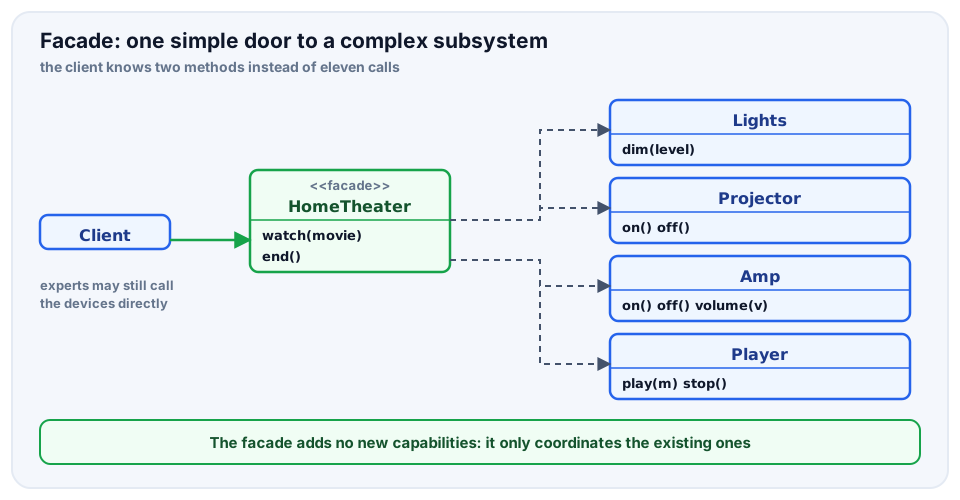
A Facade is a simple interface in front of a complex subsystem. Instead of knowing many classes and the right order of calls, the client calls one or two high-level methods. The subsystem is unchanged; the facade only coordinates it.
The problem: many parts and a fixed order
A home theater consists of lights, a projector, an amplifier and a player. Starting a movie needs a specific sequence of calls on all four. Without a facade every client repeats the sequence, and every repetition can get the order wrong.
class Lights:
    def dim(self, level):
        print(f"lights {level}%")

class Projector:
    def on(self):
        print("projector on")

    def off(self):
        print("projector off")

class Amp:
    def on(self):
        print("amp on")

    def off(self):
        print("amp off")

    def volume(self, v):
        print(f"amp volume {v}")

class Player:
    def play(self, movie):
        print(f"playing {movie}")

    def stop(self):
        print("player stopped")

lights, projector, amp, player = Lights(), Projector(), Amp(), Player()

lights.dim(10)               # the client must know all steps and their order
projector.on()
amp.on()
amp.volume(7)
player.play("Dune")lights 10%
projector on
amp on
amp volume 7
playing DuneA facade class