
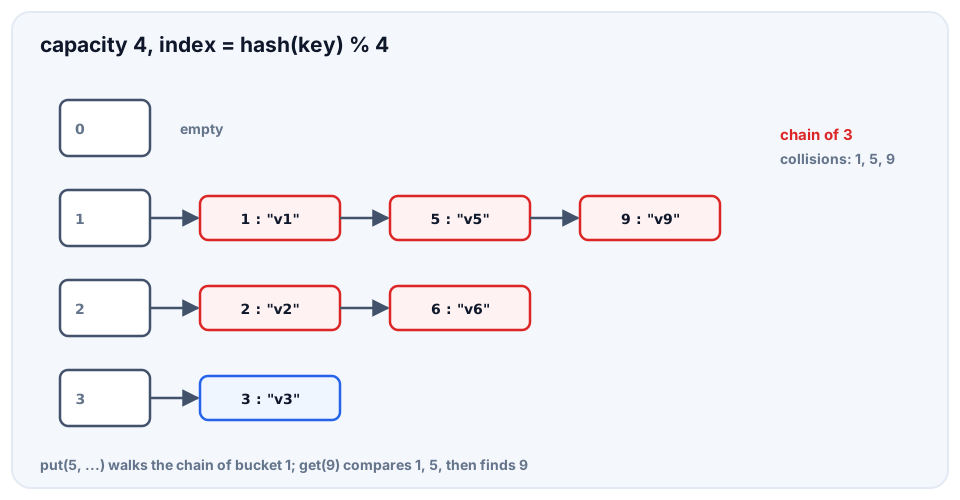
In separate chaining every cell of the hash table (a bucket) is a list. All keys that land in the same bucket are kept in that list. A collision stops being a problem: the chain just gets longer. Hash functions are familiar from the previous topic.
Operations
- Insert (
put): the bucket number ishash(key) % m. If the key is in the chain, update the value, otherwise append. - Lookup (
get): find the same bucket and walk the chain comparing with==. - Delete (
remove): remove the element from the chain.
Comparison uses ==, so the __eq__/__hash__ contract of the keys matters.
Implementation
class HashMap:
    def __init__(self, capacity=8):
        self._buckets = [[] for _ in range(capacity)]
        self._size = 0

    def _bucket(self, key):
        return self._buckets[hash(key) % len(self._buckets)]