
Given n items, each with a weight and a value, and a knapsack of capacity W, take each item at most once to maximize the total value without exceeding W. Greedy by value/weight fails here (the 160 versus 220 example from the greedy lesson), so we use DP.
State, transition, base, answer
- State:
dp[i][w]is the best value using the firstiitems with capacityw. - Transition: skip item
i(dp[i-1][w]) or take it (dp[i-1][w-weight] + value, ifweight <= w) and keep the maximum. - Base:
dp[0][w] = 0. - Answer:
dp[n][W].
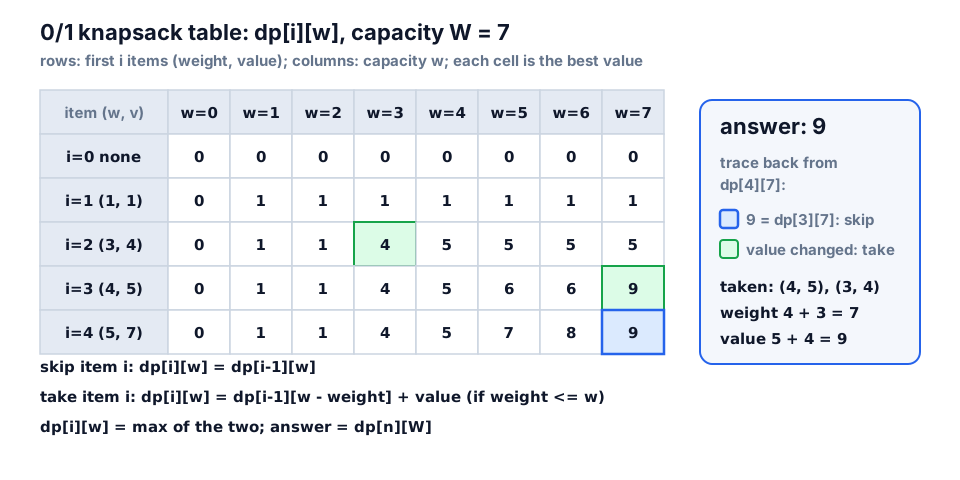
The table in code
def knapsack(items, cap):
    n = len(items)
    # dp[i][w]: best value using the first i items with capacity w
    dp = [[0] * (cap + 1) for _ in range(n + 1)]
    for i in range(1, n + 1):
        weight, value = items[i - 1]
        for w in range(cap + 1):
            dp[i][w] = dp[i - 1][w]                       # skip item i
            if weight <= w:                               # or take it
                dp[i][w] = max(dp[i][w], dp[i - 1][w - weight] + value)
    return dp